
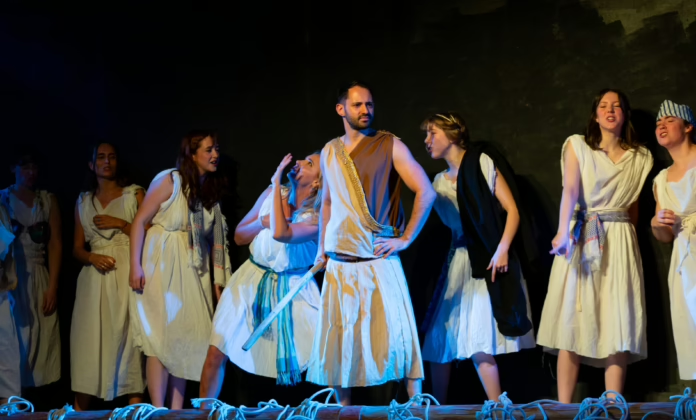
Margaret Atwood’s The Penelopiad, first written as a novella and later adapted into a stage play, retells Homer’s Odyssey from the perspective of the mistreated and previously voiceless women of the tale, specifically Penelope and the maids she gathered into her service. It is a tragic reclaiming of the story, illuminating the harsh and unwavering expectations placed upon the women and the brutality of the men they are at the mercy of. Kristin Telfer and the University of Adelaide Theatre Guild have staged an engaging version of this play at the beloved Little Theatre.
The twelve maids were the highlight of this production, with Telfer emphasising them as the heart of this story and casting a well-varied group of talented performers. The cohesiveness of this group was clear and is a testament to Telfer’s collaborative approach to direction. They were a clever take on the traditional Greek chorus, constantly reminding Penelope of her guilt and seamlessly slipping into the portrayal of a range of other characters. Particular standouts were Heather Crawford as Penelope’s wise naiad mother, Emily Dalziel as her caricatural father Icarius, Jessica Merrick as the prima donna Helen and Olivia Jane Parker as the strict nurse Eurycleia, who all brought strength to the ensemble. They performed a variety of songs throughout the play, composed by Kristin Stefanoff, which were an excellent form of storytelling and were delivered by a chorus with great coordination, though Lucy Hay must be commended for her impressive vocals in a few solo moments. Miriam Cwiek, Macey Lawson, Mia Livingston-Pearce, Sophie Livingston-Pearce, Annie Matsouliadis, Bonnie McAllister and Carmen Sinclair rounded out this tight-knit group.
Jane Ford was well-cast and had a mammoth undertaking as the titular Penelope, demonstrating a wonderful storytelling ability with a voice well-suited to this type of role. She led the play with quiet power, and her narration, sometimes delivered from a Penelope existing in the afterlife, conveyed her sorrow and regret. Theo Papazis portrayed the confidence and machoism of Odysseus ably, and his simple characterisation contrasted well against the complexity of Penelope. These two worked well together, though it would have been great to see them lean even further into the heavier moments of the piece. Frederick Pincombe was convincing as Telemachus, delivering the youthful anger and pride with vim.
This production emphasised the fun and comedic moments of the script and made some entertaining jabs at the toxically masculine figures of the story. However, the darker, emotional highs of the play could have been more impactful and were perhaps softened by the humorous take. Without giving spoilers, the final moment of the piece was powerful and a creative use of the stage design, but could have hit the audience even harder with a darker build-up throughout the piece.
The lighting design by Stephen Dean was effective and subtly ominous, and the era-appropriate costumes by Shannon Norfolk allowed for seamless changeovers of accessories and ensured each of the maids had a unique element. The scenes also transitioned smoothly and made innovative use of the versatile theatre.
Overall, this is a production worth seeing with a talented ensemble and some clever directorial choices, presenting an important retelling of this classic story.