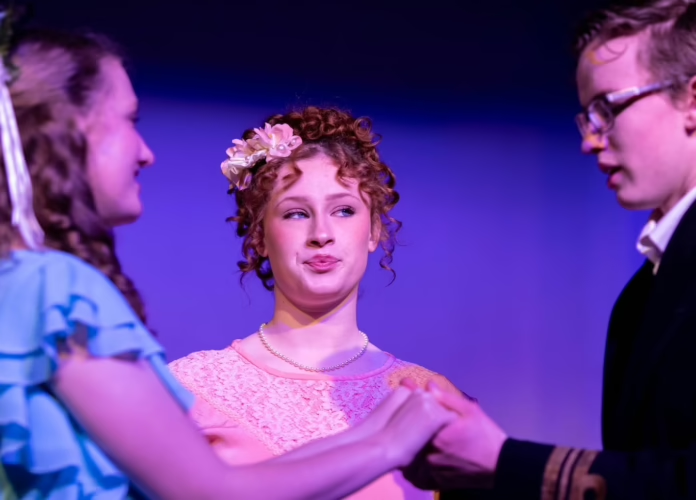
Friday nights can be a bit hectic, so to make it to the theatre for 7.00pm after a busy week’s work and a full life, as many of us have, to arrive at the Hills Youth Theatre’s venue was a small challenge. However, engaging in watching this performance of William Shakespeare’s Much Ado About Nothing was nothing but a pleasure. The venue was beautiful, and as a first-time visitor, it has such charm and I was met by happy, smiley people, not one but two wood fires roaring in their grates, and a lovely cup of hot coffee.
One of the Bard’s most popular romantic comedies is brought to life with the spirit and style of the 1920s. Set against a backdrop of vintage charm and slapstick flair, this energetic production follows the tangled love lives of Hero and Claudio, and the quick-witted clash between Beatrice and Benedick. With mistaken identities, overheard confessions, and a dash of Keystone Cops-inspired chaos, the show blends heartfelt drama with physical comedy, proving that love and laughter never go out of style.
Last night’s performance of Much Ado About Nothing was a colourful and high-energy take on Shakespeare’s classic, brought to life by a large and enthusiastic cast of 25. With live music, creative staging, and a youthful vibrancy as one might expect from a cast between 15 and 18 years old, the show delivered both laughs and heartfelt moments, even as some technical aspects showed the challenges of such an ambitious ensemble production.
The direction was confident and playful, blending Shakespearean wit with moments of modern flair. The incorporation of live music and song added atmosphere and emotional depth, while dances brought vitality to group scenes. The ensemble was used cleverly, creating dynamic movement without overwhelming the central action.
Beatrice (Jaia Eckert) and Benedick (Beren Carney) were standout performances—witty, emotionally layered, and full of charisma. Their chemistry anchored the show. Jaia particularly impressed me as witty, sharp-tongued, and fiercely independent. So strong was her approach to her first scene as she waged a “merry war” of words on the men as they arrived from winning a war, I did think that if only she had gone to war with them, that war would have been over much, much more swiftly. Jaia is certainly one to watch in both her character development and her approach to delivering classical text showing skill, balancing the text with expression, meaning, pace and clear, precise diction. Great job. Beren also took on much of the heavy lifting in the show and did so very well. As he warmed up and shook off the nerves of a first night, he came to life with energy, passion, and sincerity in spades. A soldier and nobleman, Benedick is known for his cleverness and disdain for marriage, which Beren displayed very well. It was his shift to being in love that had me fully engaged and I felt that I was with him as he risked everything for love and truth. His eventual love for Beatrice was both humorous and heartfelt.
Other main characters who shone brightly in this show were Hero and Claudio, who worked beautifully together. Hero is sweet, gentle, and modest, all characteristics Charlie Szentirmay displayed in her performance. Claudio, played by Jackson Barnes, was full of expressive, passionate protestations. He falls, with a little encouragement, in love with Hero, setting off a chain of events which drives the plot’s twists and turns ending in… no spoilers here.
Mahendra Baker played Don Pedro, the Prince of Aragon, as a respected and charming leader who enjoys matchmaking and bringing people together. He was witty and good-natured and carried with him the status of the Prince in his approach, very much at ease on the stage physically and managing the text well.
My final individual mention is of Rhys Woodcock, who presented to us a wonderfully big-hearted character, Dogberry, a comic actor’s dream. Dogberry is the bumbling constable who accidentally uncovers Don John’s plot. Though he misuses words and is often comically absurd, his accidental wisdom helps bring justice to the wronged characters. He represents the theme of truth coming from unexpected places. Rhys was supported by a group of bumbling idiots who acted as his comic foils, with suitable gurning grotesque faces to boot. At times slightly upstaging his fellow actors, Rhys on the first night received the biggest mid-show round of applause.
The supporting cast brought strong energy, with several impressive comic turns and expressive physicality. While some actors struggled with pace and vocal emphasis, every word was ultimately clear, and the emotional journey of the play was well communicated.
The set was simple but effective, allowing quick scene transitions and moments of surprise. Costumes cleverly blended period 1920s naval undertones with that of Keystone Cops fun and games. Sound levels occasionally dipped—particularly when competing with live instruments—and some, but surprisingly little, dialogue was rushed or softly delivered. However, these were minor setbacks in an otherwise polished and well-presented production.
What the performance may have lacked in technical polish, it made up for in heart and spirit. The cast’s joy was infectious, and the creative touches kept the audience entertained from start to finish. This was a warm, lively, and engaging adaptation of Shakespeare’s beloved comedy—full of promise and proof of the power of youthful theatre.
This Much Ado was a delight—brimming with life, laughter, and genuine talent. With a few refinements in pace and technical execution, this team has the potential to create truly memorable theatre. I’ll let you into a secret: I love a bit of Shakespeare and have consumed a fair few hours of mixed-quality performance over the years. This show was very, very good, as it is not easy to bring “those funny words” to life. My mantra is simple: if the actors know what they are saying, then we as an audience have at least half a chance. And if you go to see this show, you have more than half a chance of seeing something special performed by a fabulous group of young people, clearly very well directed, drilled, and supported. If you love a bit of Shakespeare, you will enjoy the spirit of this piece immensely.