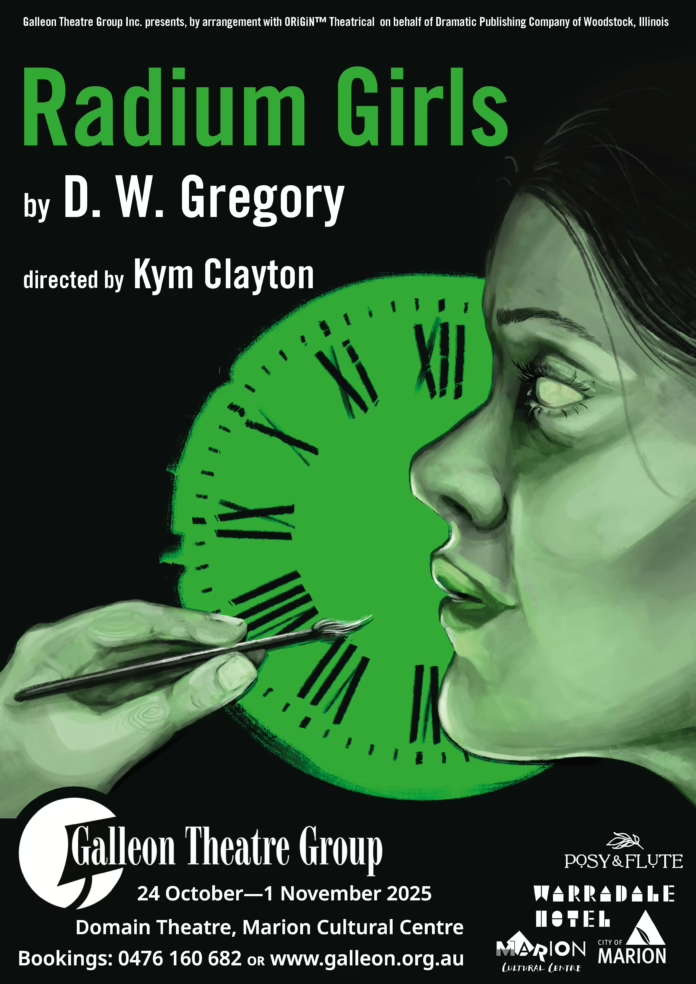
Corporate greed and the mistreatment and silencing of workers is a tale as old as time, manifesting today in the form of the Bezoses and Musks of the world. D.W. Gregory’s Radium Girls turns the dial back to the early 20th century and the women who fought for recompensation after suffering devastating illness from working in factories painting luminous watches with the radioactive element radium. Galleon Theatre Group has commendably and respectfully retold this unsettling chapter of history and ensured that no meaning is lost on the audience.
Kym Clayton has achieved this in his careful direction with astute use of a Brechtian approach that forces the audience to confront the truth of the play. He and his team have cohesively coordinated all production elements: the set, constructed by Clayton, David Cuppleditch and Malcolm Wilkinson, emulates a bleak factory setting with dirty glass windows and uses wheeled tables that make for smooth scene transitions. A platform painted as a clock forms the centrepiece, upon which the corporate overlords plan to mislead the public and avoid responsibility. This, coupled with the ever-ticking sound effect that plays in the background of many scenes, managed by Marcel Gussmann, Tim Hall and Warren McKenzie, effectively conveys the borrowed time the women are working with, their fate sealed the first time they picked up a brush. The use of lighting bars to create a green, radioactive glow and ultraviolet lights, skilfully designed and operated by Trish Winfield, build an uncomfortable atmosphere and make for an unforgettable final beat of the performance. There were a few seemingly missing technical elements that were mentioned in dialogue, such as a name on a gravestone and a blackened hand, but these did not ultimately detract from the intensity of the production.
The cast must be commended for this marathon of a play. Most actors played several roles – in keeping with the Brechtian style – and none left the stage the whole time, constantly at the ready for quick costume changes and scene transitions. The precision they maintained throughout the entire performance is a testament to their focus and Clayton’s direction. Admittedly, the script didn’t provide many opportunities for them to shine in the exposition-heavy first act, but they didn’t pull their punches in the second.
Lucy Johnson was a warm and steadfast conduit for the audience as the protagonist Grace, through whose eyes we perceived the injustices these women endured. Johnson portrayed her character with strength, showing both her unjust suffering and utter conviction in her refusal to back down. Adam Schultz as the conflicted antagonist Roeder was brilliant, showing us a dark descent into guilt while being too deep in to back out. Despite barely speaking to one another, the tension between the two was palpable. The other actors all skilfully switched between several roles which are too numerous to name, so I will stick to the highlights: Scott Battersby as Lee and Andrew Horwood as Markley personified the corporate corruption and denial well; Aled Proeve was charming as Grace’s desperately optimistic fiancé; Deborah Walsh carried off the determined reporter Nancy Jane Harlan with fervour (an audience favourite); Veronika Wlodarczyk and Deborah Proeve as the factory workers Kathryn and Irene had great chemistry and set the unsettling tone right from the opening as they joyfully played with radium; and Joanne St Clair as the morally-driven Mrs Roeder was captivating – the final scene between her and her on-stage husband Schultz was particularly powerful.
Clayton and Galleon Theatre Group have assembled a truthful and powerful production that presents a dark chapter of history that still uncomfortably resonates today.